


Mystro Driver: Drive & Deliver
3.7353.00 Reviews
App Specs
- Version
- v2026.8.6
- Updated On
- License
- Free
- Downloads
- 100,000+
- Developer
- Mystro Driver
- Categories
- Productivity
- Platform
- Android
Screenshots
 Analysis by AppCompare
Driving for more than one gig platform can turn a simple shift into a constant cycle of checking screens, comparing requests, and switching apps while trying to stay focused on the road. That repeated juggling is the problem Mystro Driver: Drive & Deliver is meant to ease. I see its value less as a shortcut to guaranteed higher pay and more as a way to reduce the small decisions and interruptions that build up over a working day.
That distinction matters. A tool that helps organize Uber, Lyft, and delivery work can save attention, but it cannot make every request worthwhile or remove the need to judge your own schedule. For drivers who already work across services, the idea is practical: spend less time managing separate apps and more time making deliberate choices about which work to take.
Where the repeated app juggling gets in the way
When two or more driver apps are open, the hard part is not simply seeing another offer. It is noticing it in time, deciding whether it fits, and avoiding a messy handoff between platforms. Even a brief glance away from navigation or the road adds friction. Mystro is designed around this overlap, bringing multi-app switching into a more coordinated workflow rather than asking you to manage every screen independently.
It is a free productivity app from Mystro Driver, aimed at people who drive passengers or deliver food through services such as Uber, Lyft, and Grubhub. The app has a 3.3 average from around 5,100 ratings, which is a useful reminder to treat it as a tool to test against your own routine, not as a guaranteed fit for every driver. It has passed 100,000 installs, is rated for Everyone, and first appeared on August 17, 2022.
For me, the strongest reason to consider it is not the promise of earning more on its own. It is the possibility of reducing repetitive app handling when you are already working with several platforms. If you drive for just one service, or rarely switch between passenger trips and delivery work, that advantage may be too small to justify changing your setup.
Getting Started with Mystro
First things first, downloading Mystro Driver: Drive & Deliver was a cinch. Available on both Android and iOS, it took just a couple of minutes to install. The setup process was straightforward, guiding me to link my Uber, Lyft, and DoorDash accounts seamlessly. I was impressed by how intuitive the interface was right off the bat. No need for a Ph.D. in tech to get started here!
The current version is v2026.2.23, and the app is free to download with in-app purchases ranging from $4.99 to $139.99 per item. I would check the purchase details before relying on any paid option: a free download does not necessarily mean every capability you want is included at no cost. It requires Android 7.0 or later on Android, so an older device may need a compatibility check before you build your shift around it.
Worth Reading Before You Choose

Flipboard Shows What News Apps Must Do Beyond the Feed

Switching to Android Auto Means Rethinking Your Driving Routine

Google Calendar Makes a Crowded Week Easier to Manage

Ludo King Makes the Most of the Minutes Between Plans

Baby Panda World Brings Quick Play to Modern Phones, but Its Game Library Feels Busy

ESPN’s Live Game View Makes Following Close Games Easier
Interface and Usability
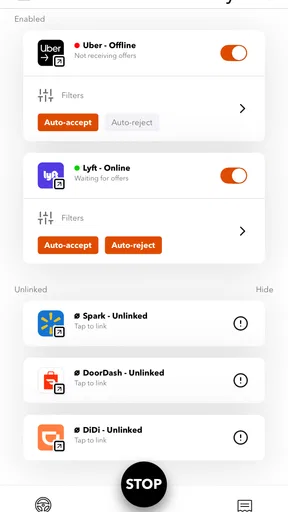
Once logged in, the app’s dashboard is where the magic happens. It’s clean, uncluttered, and dare I say, a joy to navigate. The app allows you to toggle between different platforms effortlessly. Want to focus on ride-shares in the morning and switch to food delivery post-lunch? Easy peasy. Just a couple of taps, and you’re good to go. I loved how user-friendly the whole setup was.
Another standout feature is the built-in GPS navigation which integrates smoothly with your preferred map app. No more toggling between apps to get directions. It’s all in one place, and it works like a charm.
A calmer first shift starts with a small test
I would not connect everything and immediately trust automation during a busy stretch. A better first run is to set up one familiar service, learn where its controls sit, and try the workflow during a period when missing a request would not derail your plans. Once that feels predictable, add another platform and check how the handoff behaves in the conditions where you actually drive.
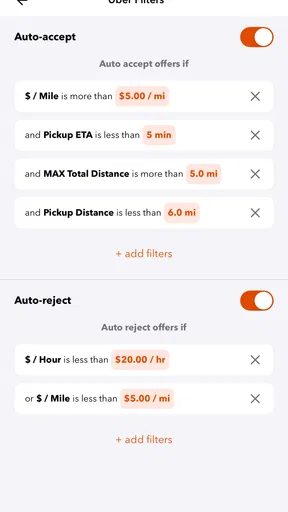
This is also a sensible time to decide what you want Mystro to do for you. Some drivers may mainly want fewer manual switches; others may care more about screening out trips that do not fit their preferred distance or passenger-rating thresholds. Starting with one clear priority makes it easier to tell whether the app is genuinely helping, rather than mistaking a busy dashboard for a better shift.
Before setting out, I would also confirm that the driver apps themselves are signed in and working normally. Mystro coordinates a multi-app routine; it does not replace the underlying services. If one source app needs attention, that can still interrupt the plan, so a quick check while parked is more useful than troubleshooting after a request appears.
Maximizing Your Earnings
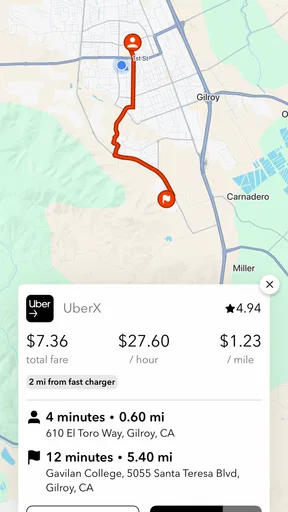
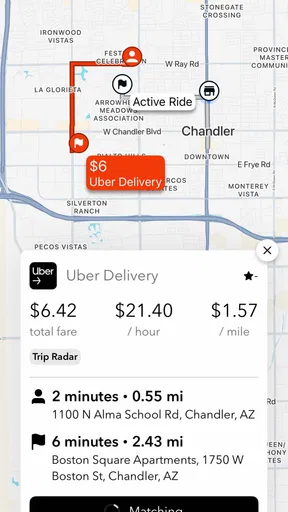
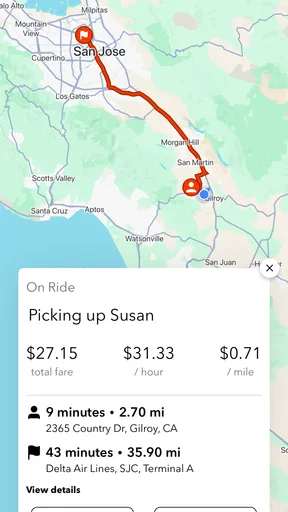
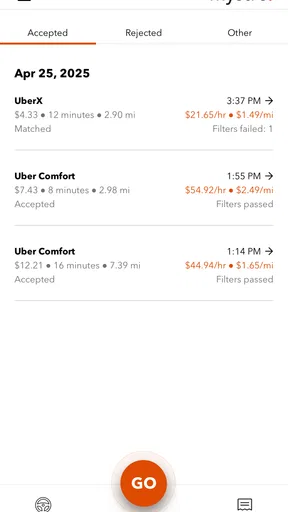
Now, let’s talk about the real reason you’re here—making more money! Mystro’s ability to auto-switch between apps based on your preferences is a game-changer. For example, if you’re cruising with Uber and a more lucrative Lyft request pops up, Mystro can automatically pause Uber and accept the Lyft ride. It’s like having a personal assistant who’s always got your back.
What really got me was the app’s feature that helps avoid undesirable trips. You can set filters for trip distance, passenger ratings, and more. This means you spend less time on less profitable rides and more time maximizing your earnings.
The useful trade-off is control. Automation can reduce the need to watch several offer screens, but your preferences determine whether the choices it makes match your real priorities. A distance filter that looks sensible on a quiet afternoon might be too restrictive when you want to stay busy; a relaxed filter may keep work flowing but admit trips you would rather skip. I would adjust settings gradually and judge them against the kind of shift you are trying to have, rather than treating one configuration as right for every day.
What a mixed-platform day can look like
Imagine starting a weekday with passenger rides in mind, then deciding after lunch that delivery work better suits the time and area you are in. Instead of repeatedly opening each service to change focus, you can use Mystro’s platform controls to move between the two parts of your day. If an offer arrives while you are already handling another task, your chosen switching rules can help reduce the manual juggling.
That scenario is most useful when you have a genuine reason to keep several services available, not simply because more apps must mean more income. A long pickup, a destination that takes you away from your preferred area, or an awkward gap between jobs can change the value of an offer. The app can help apply your preferences, but I would still make the larger decisions with your route, time, and personal comfort in mind.
One practical habit is to review the outcome after a shift: note whether the filters kept you from offers you would have wanted, or whether they saved you from work that did not suit the day. That turns settings into something you tune from experience instead of guessing at once. It also helps separate the app’s convenience from the broader question of whether a particular platform or type of work is paying off for you.
Reliability and Performance
I’ve been using the app for a few days now, and it’s been pretty reliable. No crashes or glitches, which is a big win in my book. The only hiccup I encountered was a slight delay in switching apps during peak times, but nothing that would make you pull your hair out.
That delay is worth taking seriously even if it is occasional. When timing matters, a handoff that is not immediate can make automation feel less dependable than a deliberate manual choice. I would keep an eye on how it behaves during your busiest periods and avoid assuming that every switch will happen at exactly the moment you expect. If a request requires a quick decision, stay attentive and use the app as assistance rather than as a substitute for awareness.
Battery usage was another aspect I kept an eye on. Given how much of a power-sucker some apps can be, I was pleasantly surprised that Mystro is quite efficient. My phone didn’t feel like it was on fire by the end of the day, which is always a plus.
Still, a driver’s phone is doing several jobs at once: keeping navigation available, showing offers, and running the services needed for a shift. I would test the complete setup on a normal working day, not just open Mystro briefly at home and assume the same experience will hold on the road. If you depend on your phone throughout the day, keeping your usual charging plan in place is a more reliable approach than expecting any single app to solve battery demands.
Where it fits among the usual alternatives
The simplest alternative is to run each driver app on its own and switch manually. That costs less setup effort and gives you direct control, so it can be a better choice for someone who only checks another platform occasionally. The downside is that you are responsible for monitoring the separate apps and making every change yourself, which is exactly the repetitive work Mystro is intended to reduce.
At the other end, you could choose to concentrate on one service at a time and leave the others out of your routine. That is easier to manage and may suit drivers who prefer a predictable workflow, but it gives up the flexibility of comparing work across multiple platforms. Mystro sits between those approaches: it helps coordinate a mixed setup while leaving the underlying accounts and your own judgement central to the shift.
So I would not call it essential for every rideshare or delivery driver. Its advantage grows when you often have multiple services active and have clear rules for what you will accept. If your main frustration is unrelated to switching between apps, or if you dislike automated decisions, sticking with one service or managing each app manually may feel more dependable.
Community and Support
Mystro seems to have a pretty active community of drivers who share tips and tricks on getting the most out of the app. There’s also a built-in customer support feature, which connects you to real people who actually understand the gig economy hustle. They’re responsive and helpful, making sure you’re never left hanging.
For a first-time user, support matters most when a connection or switching behavior does not match expectations. I would describe the issue clearly and include the steps that led to it, rather than making several settings changes at once. That makes it easier to work out whether the trouble comes from the workflow you chose or from a particular app interaction, and it avoids losing track of what you already tested.
Who should give it a try—and who may not need it
I would put Mystro on the shortlist for drivers who regularly compare ride and delivery opportunities, especially if manual switching has become a distraction or a source of missed choices. It is also a reasonable fit for someone who already knows what makes an offer worthwhile and wants those preferences reflected in a more organized routine. The app is less compelling for a single-platform driver, an occasional gig worker, or anyone who is comfortable switching manually and rarely feels interrupted by it.
It may also be the wrong choice if you expect automation to guarantee a higher take-home amount. Filters and switching can shape which work you consider, but they cannot make the underlying offers better or remove the need to account for your own time and route. I would judge it by whether it reduces hassle without making you less confident in your decisions.
Wrapping It Up
So, is Mystro Driver: Drive & Deliver worth your time? In my opinion, absolutely. If you're someone who works across multiple gig platforms, this app can help streamline your day and potentially boost your earnings. The interface is easy to use, the features are genuinely beneficial, and the support is top-notch. It’s like having a co-pilot that helps you earn more with less hassle.
Of course, like any tool, it’s not perfect, and it might not be everyone’s cup of tea. But if you’re looking to simplify your driving and delivery gigs, give Mystro a spin. You might just find it to be the secret weapon you’ve been looking for.
My practical recommendation is to begin with a low-pressure trial, check the purchase options before committing to anything, and keep the app’s switching behavior under your own observation until it feels familiar. If it saves you repeated taps and helps you stay focused on the work you actually want, it has earned its place in your setup. If it adds another layer to manage, the simpler manual approach is perfectly reasonable.
Pros
- Seamless integration with multiple gig platforms.
- User-friendly interface with intuitive design.
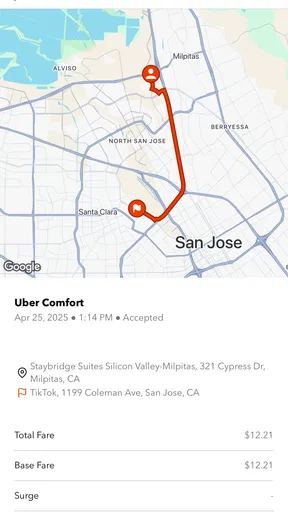
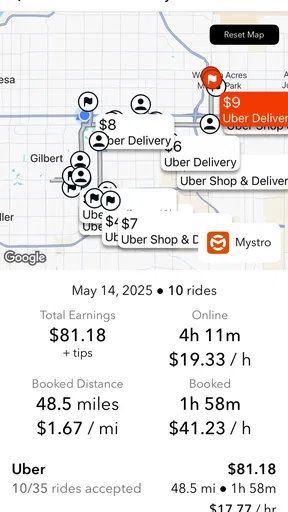
- Real-time earnings tracking and analytics.
- Customizable notifications for job alerts.
- Efficient route optimization feature.
Cons
- Requires constant GPS access
- draining battery.
- Some features locked behind a premium paywall.
- Occasional app crashes during peak hours.
- Limited customer support response times.
- Data-intensive
- affecting mobile data usage.
FAQs for Mystro Driver: Drive & Deliver
What is Mystro Driver and how does it work?
Mystro Driver is a versatile app designed to help gig economy drivers maximize their earnings by efficiently managing rideshare and delivery requests. The app automatically switches between different platforms, such as Uber, Lyft, and DoorDash, allowing drivers to accept the most profitable jobs. It simplifies multitasking, reduces downtime, and enhances productivity.
Is Mystro Driver compatible with my device and apps?
Mystro Driver is available for both Android and iOS devices. It is designed to work seamlessly with popular rideshare and delivery platforms, including Uber, Lyft, and DoorDash. Before downloading, ensure your operating system is up-to-date, and check the app store for compatibility with your device type and version.
Does Mystro Driver require a subscription or any fees?
Mystro Driver operates on a subscription model with a free trial period for new users. After the trial ends, users can choose from various subscription plans that offer different levels of service and features. The fees help maintain the app's quality, security, and regular updates, ensuring a smooth user experience.
How does Mystro Driver handle my personal and financial data?
Mystro Driver prioritizes user privacy and data security. The app employs advanced encryption to protect personal and financial information. It only accesses data necessary for its operation, such as platform accounts and location services, and complies with relevant data protection regulations. Users are encouraged to review the privacy policy for more details.
What are the primary benefits of using Mystro Driver?
Mystro Driver offers several benefits, including increased earnings through optimized job selection, reduced downtime by automatically switching platforms, and enhanced safety by minimizing manual interactions while driving. The app's intuitive interface and customizable settings allow drivers to tailor their experience, making it an essential tool for gig economy professionals.


